
Build fully custom reports with Breeze and save to a dashboard
Thursday, November 5, 2026
What it is
Breeze can now build a report on any data in your HubSpot account, visualized any way you want. You aren't limited to what the report builder supports. These reports work like any other HubSpot report: they refresh with the dashboard, let you drill into the data, and save to your reports library.
Why it matters
Some reporting questions can't be answered in HubSpot today. The chart you need may not exist, or the builder may not be able to combine the data you need. Now you can ask Breeze for that report and keep it next to the rest of your reporting. It stays current, so you don't have to rebuild it every week.
The Take
It's the first thing leaders do once they trust the HubSpot data, even before they trust the HubSpot data, I want to see this report.
Per the panel, Breeze can now build a report on any data in your HubSpot account, visualized any way you want, so you are not limited to what the report builder supports. These reports work like any other HubSpot report: they refresh with the dashboard, let you drill into the data, and save to your reports library. It is a private beta for all hubs and tiers.
Casey went in expecting a tool that builds custom reports and adds them to dashboards, and read this as a step past that. She requested the beta on the spot for a client. She also told the coaching-call story again: she walked someone through the custom report builder while Chris typed the same request into Breeze, and Chris's version was faster. Her read is still that there is value in knowing the buttons and what data is available, and she half-invited this update to change her mind. Her worry about the client she requested it for: their data structure is very complicated, “like stilts, basically,” and she wonders whether it is too fragile for this.
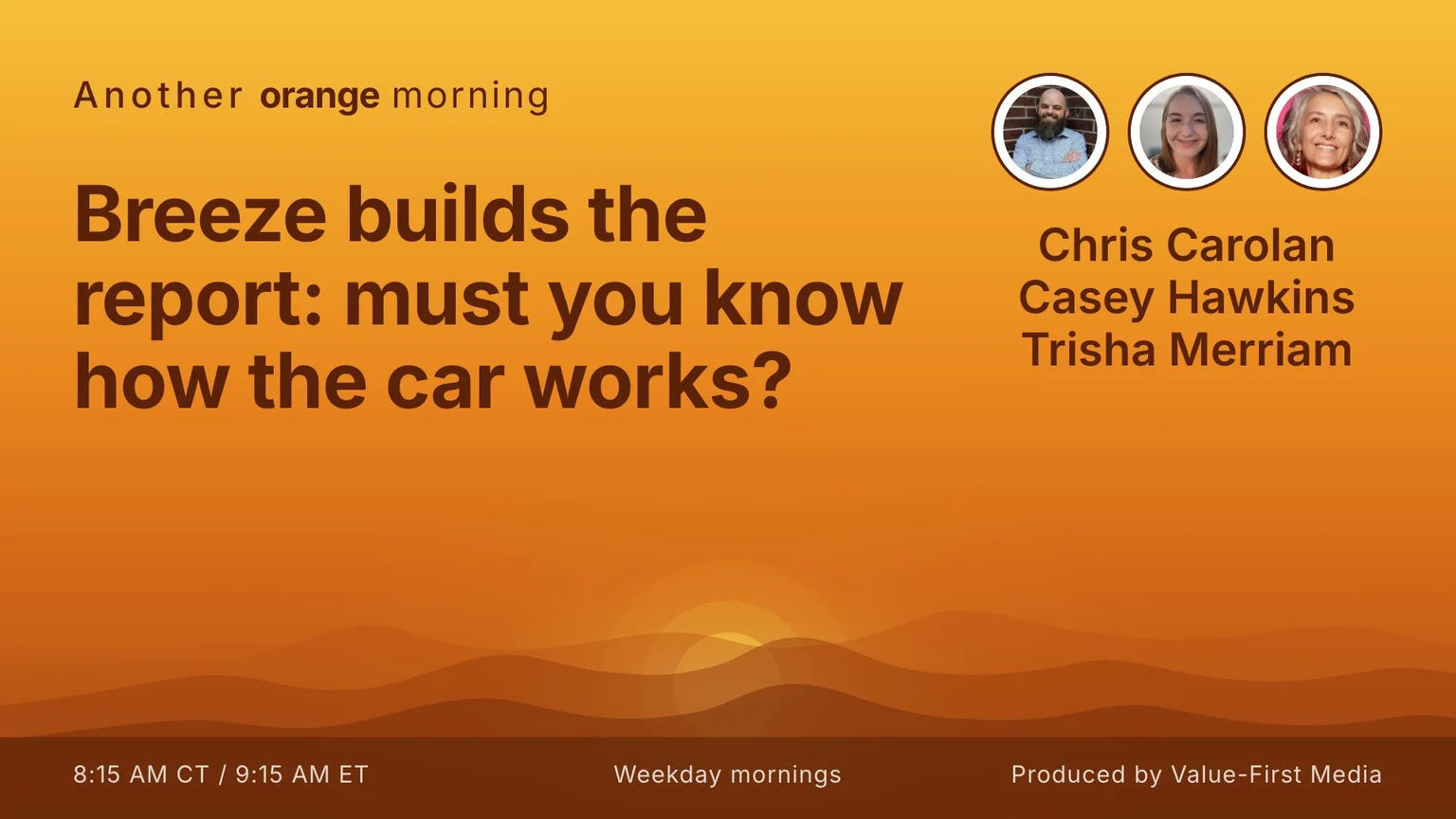
Trisha took the other side of the “know how the car is built” argument: she does not want to know how it works, she wants to get to the end point as fast as possible. Chris said he was with her, then added the second step: there are “lots of people that cannot move forward unless they know how the car works,” so the job is getting people comfortable enough to start talking to Breeze. He said he is seeing some success with that through the AI-native coaching and OS.
Chris then gave his read on why HubSpot is shipping this. He guessed that by the end of the year Breeze is making full dashboards (“no inside information. I haven't asked this of anybody.”), and said the pressure is that Claude just came out with dashboard functionality that updates itself. His point is that leaders already do this with GPT and Claude connected to HubSpot: “It's the first thing leaders do once they trust the HubSpot data, even before they trust the HubSpot data, I want to see this report.” They do not want to know the properties or the objects, and that, he said, is what the Will It Breeze clips have been showing: the chart, plus the story you put next to it. In his view the dashboard and reporting updates of the last year all led here.
The caution came from Casey and Trisha, and Chris agreed it is valid. Trisha has a client with sixty-plus attribution properties; she gave them six to look at and left the rest in place, but Breeze will not know that unless it goes into the context page, and somebody has to know where the good data is and what is old or dirty. Casey wondered how many projects over the next few years will be simplifying data models in pursuit of this. Chris pushed on the word: for him that is where the complexity lives. He described people who want it to be simple, so they push everything into too few objects, call associations too complex, and wind up with drop-downs they cannot maintain. His answer was that if those people are going to get better, “it's through a conversation with Breeze,” which starts catching gaps on your behalf once they begin: here is your outcome, here is where the data model could work, but you have no data there.
What to do: if you are in HubSpot day to day, request the beta. Pick one report you have been unable to build and watch what Breeze asks and what it assumes about your data. Before you rely on it, write down which properties are the trusted ones, because Breeze will not know. If you are not ready to request it, you can wait for the beta to widen. The tape did not cover how to request access or how the beta is rolled out, so check the HubSpot product update page for that.
Watch Us Discuss This
The full segment from the show, us working through this update start to finish.
FAQ
What is this update?
Per the panel, Breeze can now build a report on any data in your HubSpot account, visualized any way you want, without being limited to what the report builder supports. The reports refresh with the dashboard, let you drill into the data, and save to your reports library.
Who gets it and what is its status?
The record lists all hubs and all tiers, as a private beta. Trisha pointed out the all-tiers listing on air, and Chris noted the whole analytics suite coming down to Starter.
Why did HubSpot ship it?
The panel says some reporting questions can't be answered in HubSpot today because the chart may not exist or the builder may not combine the data you need. Chris's read on air was that HubSpot did not have a choice, since Claude just added dashboard functionality that updates itself and leaders already ask GPT or Claude connected to HubSpot for the report. That is his read, not HubSpot's statement.
Do you still need to know how reports and data are built?
That was the argument on air. Trisha wants to skip the how and get to the answer. Chris agreed, with the caveat that lots of people cannot move forward unless they know how the car works. Casey still sees value in knowing the buttons and which data is available.
What is the risk?
Casey worried a fragile data structure will not hold up. Trisha's example was a client with sixty-plus attribution properties: Breeze will not know which six matter unless that goes in the context page, so somebody has to know where the good data is and what is old or dirty.
Produced by Value-First Media