
Round robin routing for calling
Tuesday, November 3, 2026
What it is
Round robin routing rotates incoming calls among available team members, ringing one person at a time. Calls no longer ring every rep at once or default to the same person.
Why it matters
Inbound call volume often lands on whoever answers fastest, which leaves a few reps carrying most of the load. With Round robin routing, sales and service teams can spread inbound calls evenly across reps, which reduces the risk of burnout, and connect callers to a rep quickly, without every phone ringing at once.
The Take
So the verification there is the fact that the call has been recorded and they're under surveillance of sorts.
Per the panel, round robin routing rotates incoming calls among available team members, ringing one person at a time, so calls no longer ring every rep at once or default to the same person. It is in public beta on Sales Hub and Service Hub Professional and Enterprise. The panel's reason is a real one: inbound calls tend to land on whoever answers fastest, and a few reps end up carrying most of the load. Casey put it well on air. There are probably two types of people, the ones answering on the first ring and the ones who let it ring a couple of times.
My question was about what happens after someone picks up. Think about calling your bank. You always have to confirm your identity, or give them some information before they can do the next step. “But I'm curious, are they actually typing in something and then all of a sudden they get the access to the record? Or they're just confirming the properties?” That is the use case I see in HubSpot: “You get the call, but you want to confirm who it is. And you need to get the record, but you have security steps in place.” The panel does not cover caller verification, so that part is still open.
Chris has spent enough time on the phone with call centers, telecoms especially, to tell the difference. When they ask for an address and he says it rapid fire, they say okay no matter how fast he goes, “which likely means they have it on the screen already.” My read on that: “So the verification there is the fact that the call has been recorded and they're under surveillance of sorts.” If the caller gets it wrong and the rep proceeds anyway, that is more of a quality gap. Chris also said that if he knows a HubSpot question is on the other end, he is answering the phone every time. We did not test routing on air; Chris joked we would have to put a number on the website first.
What to do: if you run inbound calling on Sales Hub or Service Hub Professional or Enterprise, and a few reps take most of the calls, join the beta and route one team's line first. Before you switch it on, decide how reps confirm who is calling against the record, because spreading the calls evenly also spreads that step to everyone. If phone calls are not a channel for you, skip it.
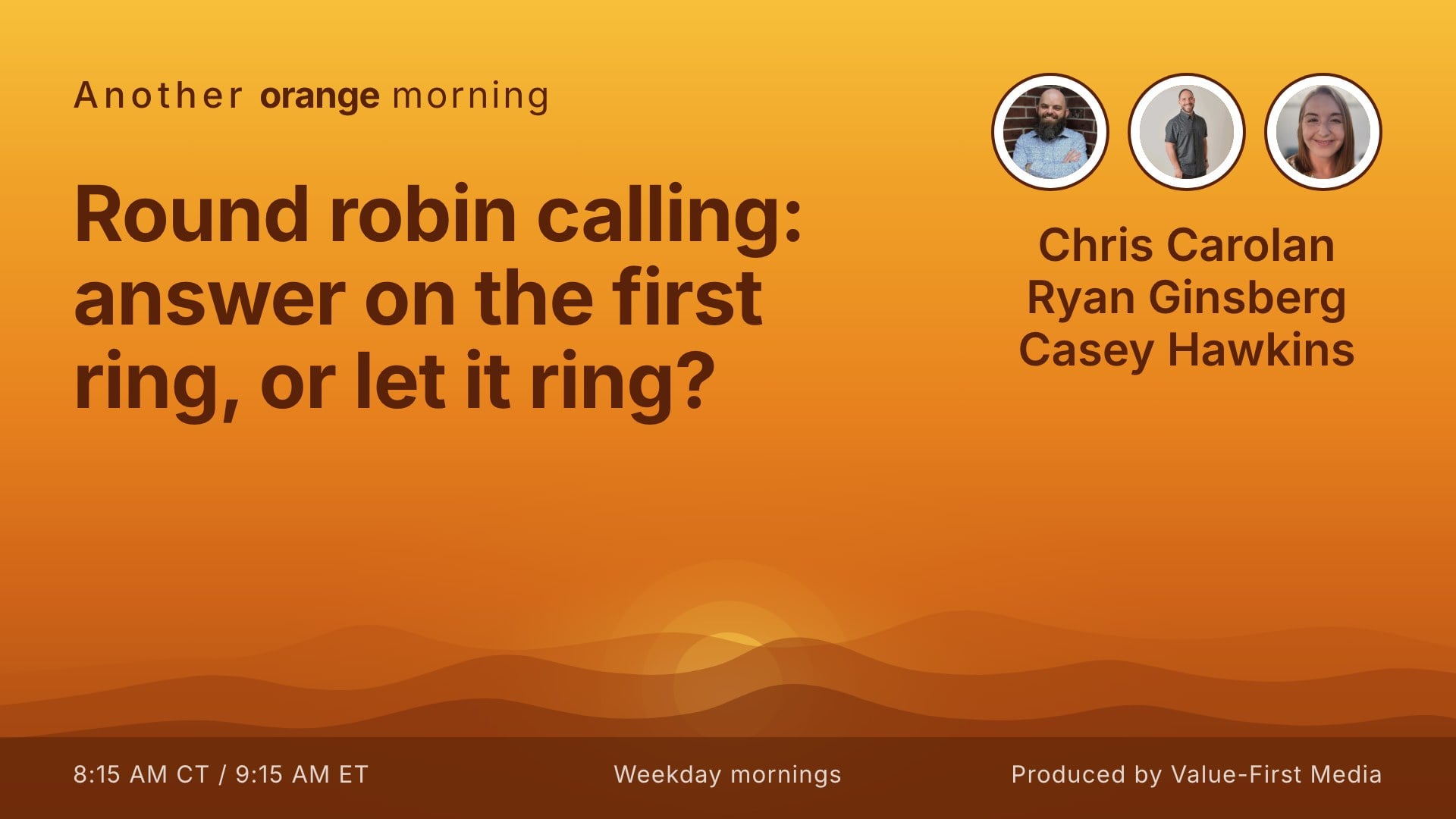
Watch Us Discuss This
The full segment from the show, us working through this update start to finish.
FAQ
What does round robin routing do?
Per the panel, it rotates incoming calls among available team members, ringing one person at a time, so calls no longer ring every rep at once or default to the same person.
Who can use it?
Per the panel, it is in public beta for Sales Hub and Service Hub at Professional and Enterprise.
Does it help confirm who is calling?
The panel does not say. Ryan raised it on air as the use case he would want to work out: you get the call, you want to confirm who it is, and you have security steps in place before you open the record.
Did the hosts test it?
No. It was discussed from the panel. Chris joked that they would need to put a phone number on the website to test it.
Produced by Value-First Media